Thursday, September 23, 2010

an economy of gifts


Usually when I see the word "economics" my eyes cross. I feel like I need to read more of Paul Krugman's columns, and feel guilty that I just don't like the topic.

But, the alms bowl brings economics into new territory: the economics of gift giving.

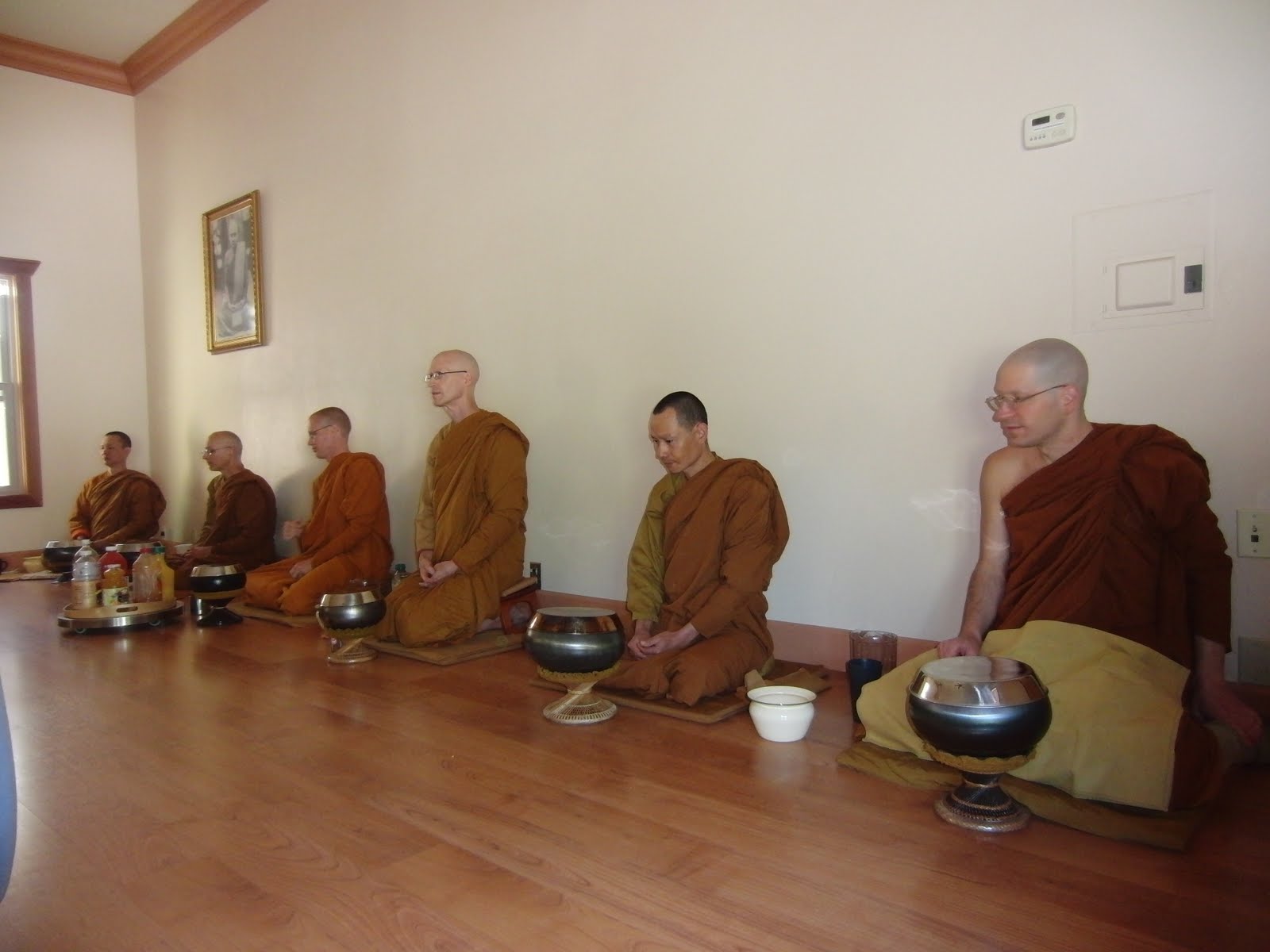
For 2600 years there has been a thriving tradition of gift giving - a cycle of lay supporters and the monastic community that relies on mutual support and reciprocity. The alms bowl is a perfect symbol of this.

Calling the alms bowl a begging bowl is a prevalent misnomer - the bowl in fact encapsulates this ethos of giving. Lay people offer food or other requisites, and though there is no expectation for a gift in return, there will follow teachings of the dharma.

Above is a photo of alms bowls, washed and drying in the sun after the meal. Alms bowls are not only used for meals and alms gatherings, but can also carry monk's or nun's possessions when traveling.

For the daily meal, monks and nuns never request food. Dogen, a 13th century monk, said: "The mouth of a monk is like an oven." That is to say, monastics never express preferences, and though we always strive to cook a delicious and filling meal (and behind the scenes are constantly inquiring and trying to discover each monk's personal preference), all meals are always gratefully accepted.


In September, we brought food on a Wednesday. The weekend before was cold and rainy and the forecast for the following weekend was for temperatures in the nineties - we were in the middle of change, trying to balance warming and cooling dishes.

September's menu for 25:

TUNA SALAD
tuna (9 cans)
celery (1 bunch)
red onion (1 )
mayonnaise
salt

EGG SALAD
eggs (2 dozen)
celery (1 bunch)
green onions (2 bunches)
mayonnaise
salt

"GUACAMOLE"
avocados cut not mashed (10)
medium hot salsa (1 jar) stirred into the avocados
with tortilla chips (2 bags)

BEAN SALAD
mixed bean salad (4 cans from Trader Joes)

SQUASH COCONUT CURRY
3 baked kobocha squashes
onions (2)
ginger
shitake mushrooms
chicken stock (1 quart)
coconut milk (1 can)
blended, plus water to thin
spinach leaves added before serving

RUGLAH
2 sticks unsalted butter
1 package cream cheese
2 cups flour
1 bag of walnuts (small pieces or chopped)
1 bag light brown sugar
cinnamon
1 egg
oil or melted butter

Combine softened butter with softened cream cheese and blend well.
Add flour and continue to blend until smooth.
Divide dough in half, flatten in a circle, and wrap in wax paper. Refrigerate over night.


Remove from refrig. Place some flour on surface you will be using and start rolling
out dough maintaining the circle, which can be any size you prefer.

Beat one egg spread and egg wash over the two dough circles.

Place either some cooking oil or melted butter on the circles, then sprinkle brown sugar on dough, smooth it out, sprinkle with cinnamon and follow with walnuts.

Cut dough into thin strips (1/16 inch). Roll each up, and place them on a lightly greased cookie sheet seam side down. Bake at 375-400 degrees depending on your oven until lightly golden
Remove from cooking sheet and let cool.


other offerings for the Abhayagiri kitchen:

3 bags of hard candies to be offered at late tea on wan phra
1 box of tea tree toothpicks
plus 1 gallon of white wine vinegar and 2 bottles of molasses

Living in a world where everything has a price tag, I'm inspired by a community where generosity and gratitude thrive daily. This practice establishes giving and receiving as a way of life, and I believe that the extraordinary in this world comes through this cycle of gift giving.

Tuesday, August 24, 2010

"Whatever IS will be WAS"--Bhikkhu Nanamoli


On Sunday July 18th, the mood at the Abhayagiri Monastery was a mixture of sadness and celebration. The scene was a farewell meal offering for Ajahn Amaro. The next day, he left for England to become the abbot of Amaravati monastery.

On special days, like this farewell meal, the kitchen is a busy place. The Thai sangha (community) fill the kitchen with the most savory of smells, cooking dish after dish, yummy curry after yummy curry. Knowing this, I brought freshly smoked tuna, cheeses...simple things that could be prepared easily and quickly.


Midsummer brought an abundance of fresh fruit. Desserts of all sorts decorated the table, and to cap the feast was one of my favorite dishes-a big bowl of Thai sticky rice.


Besides food, sangha members brought traditional gifts for Ajahn: flowers, candles, and incense.

These gifts are expressions of the impermanence of all things: flowers fade, the candle flame goes out, the sticks of incense burn away.


Coming once a month these last nine years, I have encountered many changes at the monastery:

a new kitchen
new kitchen managers
new kitchen reorganizations (where are the towels?)
anagarikas (novices) taking vows
monks coming and going
the passing of Jay

yes, all conditioned things are subject to change...

But I never thought our most perfect co-abbots, Ajahn Amaro and Ajahn Pasanno, would be split apart--oh pshaw to anicca (impermanence)!

In gratitude to Ajahn Amaro...

Monday, July 19, 2010

Why "another day another dana"?


another day another dana because...

"Love people and feed them"--Neem Karoli Baba

I coined the phrase "another day another dana" standing in the kitchen of the Abhayagiri monastery after we had prepared and offered yet another meal (at that point it had been a number of years since we made a commitment to come once a month with a meal offering for the community).

It was all so simple -- cooking a meal is the stuff of everyday life -- and yet the commitment to this practice proved profound.

The qualities of mind that developed (happiness, contentment, gratitude) have been the rewards.

The practice of generosity is a touchstone: how much to give? when to give? when not to give? on and on...

I learned I could practice this fundamental teaching of Buddhism, generosity, within my life as a householder.

no special teacher -
no secret teaching -
no travel to a foreign setting -

"so simple you can't believe it"

Sunday, June 6, 2010

A Visit in April

another day another dana because...

"If you knew, as I do, the power of giving, you would not let a single meal pass without sharing some of it." -- The Buddha


I'm always surprised to hear that most people think Buddhist monks and nuns are vegetarians.

In fact, the Buddha never prohibited the eating of meat. It's an individual choice by the community members if they want to be vegan, vegetarian, or omnivore.

At Abhayagiri, all meals that offered are excepted with gratitude.

Below is a meal that was served by us in April.

The menu:

pasta with kale, feta cheese, and pine nuts (3 pounds of rice pasta, 6 bunches of kale, 2 yellow onions, 3 cartons of feta cheese, 2 packages of pine nuts)


garlic bread (2 loaves of french bread, 2 heads of garlic, 2 cubes of butter plus olive oil)--leftover butter, oil, garlic is poured over pasta

salami and brie cheese ( 2 large salami and 3 wedges of brie)

2 cartons of cookies


plus four big bunches of broccoli (to be prepared the next day)

feeding 20
(monastics and lay supporters)


Monday, May 3, 2010

another day another dana begins

For the past nine years, once a month three friends have offered a meal to the Abhayagiri Community in Redwood Valley, California. This practice has been inspired by the 2500 year old tradition of offering a meal to monastics, and we are grateful to continue this tradition.

I will be writing about our monthly visits and sharing the menus and recipes, with the intention that others will be inspired to offer a meal themselves.

pasta salad sweets
offering a meal
another day another dana